Sunday, May 6, 2012

Final Farewell to Fear

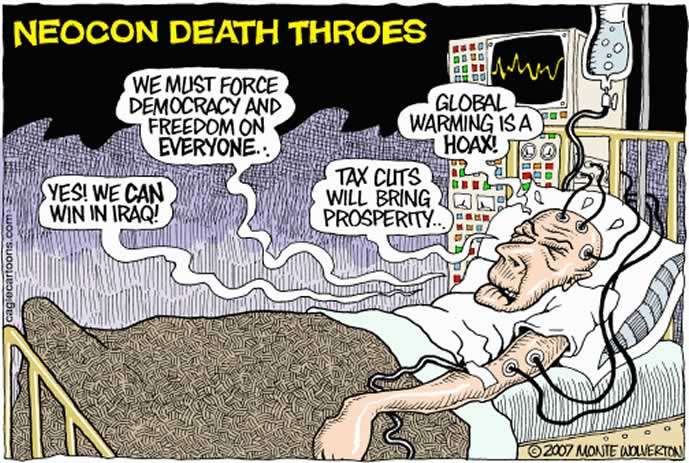
After an eye opening course on the culture of fear I feel as if I’ve finally been let behind the curtain to discover the Wizard of Oz... an old fragile man serving to trick us all. The Wizard’s powers turned out to be mere fantasies held in the imaginations of dreamers: the media, politicians, and unfortunately us. We have constructed this culture of fear and fed into the fabrications created by power hungry advocates who profit from our trepidation. Like a clever magician deceiving his audience we have been distracted by a masquerade in order to misguide us from the real problems in our society. Rather than worry about economic disparity, making healthcare affordable, or addressing the growing gun problem in America we occupy ourselves with sensational stories, which only keeps us from fixing the situation.

Subduing our appetite for hopes of change with fears of monster moms, terrorists, and killer kids keeps society at bay and politicians on top. Politicians divert our concerns, but more importantly our tax dollars. Billions of dollars go to faulty legislation, prison systems, and unnecessary safety precautions that inevitably go to waste. The solution then is simple: allocate our tax dollars to positive programs like education, rehabilitation, and social services. Unfortunately, the culture of fear is a business and destroying it would put certain people of power out of a job, so the cycle continues. Profit hungry fear mongers perpetuate lies and exaggerate statistics and we literally buy into it.

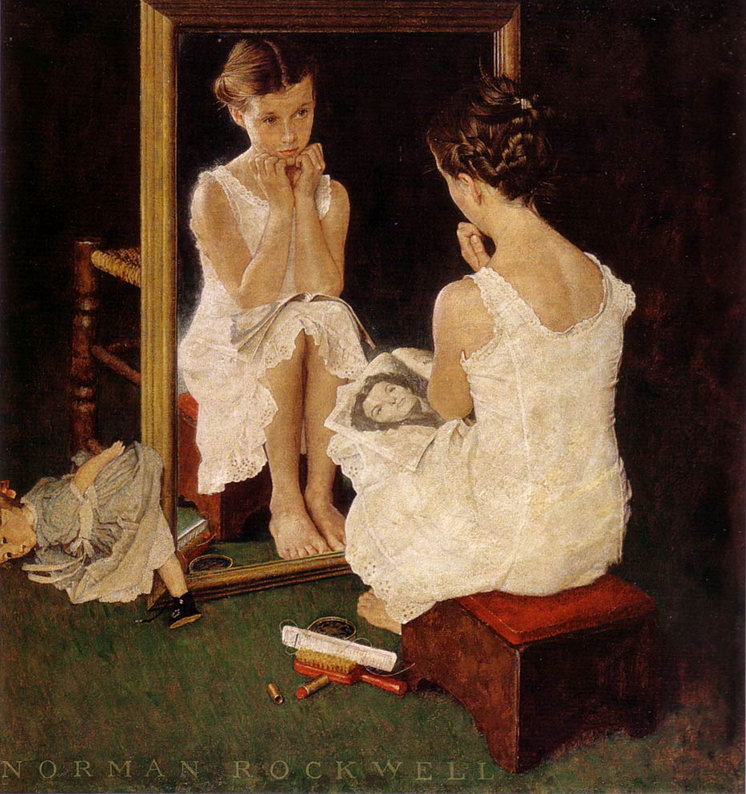
I think I’ve learnt more from Glassner’s novel Culture of Fear more than anything else I’ve read in my entire college career. I was shocked by the real statistics he gives, and how I was so easily fooled by the fake numbers from the media representations. Clearly, like mostly everyone else in America, I put too much faith in the media and elected politicians. Not that no one should be trusted because that would just add to the culture of fear in a whole other way, instead I urge people to look into the facts themselves. At the end of the day don’t believe everything you hear because taking everything at face value will leave you shortsighted. It’s time we go to the root of the problem and look in the mirror because even though we may not create fear, we keep it alive.

Monday, April 30, 2012

Can we wake up from the nightmare?


The final installment of The Power of Nightmares part 3, “The Shadows in the Cave,” tied up the complete story arc very nicely. Before watching this documentary I knew almost nothing about terrorists, Al Qaeda, the Neo-Conservatives, and sadly 9/11. I was only 11 at the time so I only saw things on the surface and usually from media pundits, which I now know cannot always be trusted. By the time I became more of an active citizen the culture of fear had already overtaken this nation leaving me to believe that terrorism and Al-Qaeda were strong forces to be reckoned with. Unfortunately, like many others I was fooled to see America as the knight in shining armor marching into Iraq and Afghanistan to save the world from evil.


The third part of this documentary opened my eyes to the fact that Al-Qaeda was an exaggerated terrorist network that was given power not from within, but from outside forces like the Neo-Conservatives, the media, and panicked citizens. I found it shocking that Bin Laden had no formal organization or name for it until the U.S. invented one for him in order to prosecute him as a leader of a terrorist organization. The lengths the U.S. government has gone to bend the truth really upset me, and more so because I was totally oblivious to all of it. The FBI manipulated evidence and witnesses to get the answers they wanted, rather than the right answers. As one scholar notes these investigative and intelligence agencies start with a conclusion built from assumptions and then fill in the blanks with junk evidence… stereotyping at its finest. As citizens we have given up so much in order to combat a phantom enemy.

Until 9/11 both the Neo-Conservatives and Al-Qaeda were down and out, but both organizations allowed one another to rise to the top again. They are almost a mutually dependent relationship, however they aren’t making any strides forward, instead they just run around in circles. 9/11 shook Americans to the core and the Neo-Conservatives took this violent imagery to show the world that they must conquer evil, placing them at the top of the totem pole of power. The documentary ends with a more promising note that citizens are becoming more skeptical of these fantasies, which I think is evident with the election of Obama and the push to get our troops out of Iraq. It should be noted that this film aired in 2004 so I think while there are some shortcomings it does thoroughly analyze the rise of these parties, and hopefully now we can see their demise in present day. I recommend this entire series and hope that while people watch they can question their own role in the construction of this nightmare.


Sunday, April 22, 2012

Phantom Enemy

In Part 2 of The Power of Nightmares the discussion continues around the battle between Neo-Conservatives and extreme Islamists. The documentary picks up around 1980 with Reagan in office and the Cold War still in full swing. What I found interesting was that during this time we were allies with Afghan freedom fighters and financially supported the Mujahideen. The CIA even trained them in assassination, guerilla attacks, and car bombs. Since the Soviets were their common enemy everything could be peaceful because each team had their bad guy and the bad guy was going down. The funny part was the United States and freedom fighters didn’t defeat the Soviets because the Soviets defeated themselves. One man interviewed said that the Soviet Union rotted away from within, yet Neo-Conservatives and extreme Islamists took this myth and thrived on it, which led them to much more radical endeavors. The myth that both groups were superior and undefeatable only left them with one more thing to do: find an enemy to make inferior, which happens to be one another.

Once these former financial allies turn on one another both groups begin to face internal destruction as well. Extreme Islamists are being heavily resisted because their willingness to kill innocents at no end and even turning on one another. Neo-Conservatives start to lose support and have to force preachers to advertise for them. These two groups definitely perpetuate our culture of fear and fuel the Mean World Syndrome, but I don’t think they are winning in the way they want to be. In my opinion some of these ultra conservatives just sound so overboard and not every Muslim is turning into a terrorist like ignorant people would like to believe. I hope this final part will answer for me who is winning for pushing these extreme sociopolitical agendas? It seems like the leaders and members of both these groups have fallen victim to their own game. In the interviews with the Neo-Conservative party members I honestly felt uncomfortable because they acted as superior as Bin Laden in their tone of voice and their deceptive rhetoric. They actually believe the very illusions they drew up; it almost felt like I was watching Inception. I’m hoping this last part doesn’t leave me on a cliffhanger like Leo did, but I’ll give my final recommendation after I complete the series.

The Ends Justify the Means

Part 1 of the BBC series Power of Nightmares explains the development and progression of our biggest nightmare: terrorism. While you can simply wake up from a nightmare it seems as if we can’t escape terrorist threats, yet this series proves that terrorism is as fantastical as the boogeyman, which relies on popular myth more than reality. The main people that carry out this fantastical story that we are constantly at threat from evil forces come from two opposing political groups, the United State’s Neo-Conservative party and the extreme Islamist Jihad.

This series traces back to the 1960’s when two scholars created ideologies that would take on a life of their own far beyond their years, Leo Strauss and Sayyid Qutb. While Strauss influenced the founding members of Neo-Conservative party Qutb began a lifestyle that inspired radical Islamist leaders. This film goes back and forth from one ideology to the other over the course of 20 years. This technique made following the plot a little difficult in term of location, yet it drew up a nice timeline approach. In the early 1960’s with liberalism on the rise Strauss believed that America was beginning to collapse from moral decay, similarly to Qutb’s opinion that Western capitalist infiltration to Egyptian culture resulted in the collapse of traditional Islamic values.


The film continuously pointed out that both groups and their leaders rose to power based on emphasizing fear. These leaders no longer spoke of promising dreams, but instead on protecting us from evil threats (ones which we cannot see). These threats are nothing more than complete fabrications used to scare us into our isolated worlds where we are sheltered from the truth, keeping us in place and them in power. Nevertheless, the harsh reality that we are left with is two radical political groups that have bought into their own garbage. This was the most interesting point they made in Part 1 was that after all this time these groups began to justify their own immoral behaviors, like killing and lying, in effort to continue their own sociopolitical agenda. These groups are truly convinced that they are right and every other way is wrong, and they will stop at nothing to become the dominant power. Feeding us lies and killing the innocent is good reason for them because the ends always justify the means.

Sunday, April 1, 2012

Edward Said on Orientalism

The documentary Edward Said on Orientalism discusses his research on the representations of people from the Orient in popular media and literature. The Orient refers to the east and encompasses multiple countries and cultures, yet we only receive one similar image based on abstractions rather than direct experience. Said is from Palestine and he began his research because he didn’t relate to the representations and discourse about the Orient.

Said claims that people understand the east through a lens he calls Orientalism. An interesting point he made was the difference between Americans’ perception of Orientalism compared to Britain and France. While Britain and France had a direct relationship with the Middle East during the years of imperialism and colonization the United States lacked authentic exposure. Thus, Americans’ impression of the Orient relies more on fabrications than actual facts. We are left with a picture of the Orient painted by commercial media industries looking to profit first and foremost. For some reason the discourse of the Orient never develops, creating an eternal timeless quality that doesn’t grow, but stays stagnant. So we get a repetitive (and monotonous) story that continues to circulate through our society. Commercial media follows the code that all Arabs and Muslims are dangerous extreme terrorists and villains. This is a powerful discourse that persists throughout our culture and is easily tolerated. In the film Sut Jhally notes that racial slurs about Arabs and Muslims are widely accepted and rarely given a second notice.

The most notable part of the film was Said’s concluding statements that referenced the work of Antonio Gramsci. “History has left us in an infinity of traces,” and it is up to us to compile a collective history. We must look at each discourse from multiple points of view if we want to gain a true knowledge. Trading places with someone sheds a new light on the situation that allows a person to sympathize with the Other, that the media seldom portrays. Coexistence can be accomplished when each person makes it a mission to include the Other without suppressing differences, and instead embracing them.

Thursday, March 15, 2012

Fear the Right Things

So far this has been one of the most intriguing classes I’ve taken in the two years I’ve been at UMass. From the local news, television shows, to films we can see how our media perpetuates the culture of fear in our society. I’ve always been rather skeptical about certain representations in the media, but as a white, middle class female certain things were just invisible to me. I think the readings and films we have viewed this year definitely have opened my eyes to the facts rather than the mask that politicians and media outlets parade in front of me. Overall the biggest lesson I’ve learned is that money sticks with money, and the rest can just eat cake.

One of the most interesting articles to me this year was Sharrett’s analysis of film in our neoconservative culture. No doubt it was definitely one of the most difficult reads, however it revealed so much about our culture’s economic system and the media representations used to keep it in place. One of my favorite points he made was how liberal rhetoric gets used to make people believe that are system accommodates to disparate groups in society, yet as he says the ‘neos’ just make our corrupt system follow a lawful course.

This has been one of the most challenging courses, but I feel I’ve learnt so much from the material and also my peers. I think the discussion helps a lot in expanding my thoughts because to really understand our culture is to garner multiple perspectives from diverse backgrounds. Some people mention things in class and I just think, wow I never would have seen it that way, but it makes so much sense. The culture of fear can be seen everywhere, and personally for me I see it in my parents the most. Perhaps when you have kids you begin to fear the world they will grow up in more than your own. I hope this class will ease my own exaggerated fears, as it has thus far, and allow me to concentrate on more important things like global warming and economic disparity.

Sunday, March 11, 2012

Welcome to the Emerald City


After watching the pilot episode of Oz and several clips from other seasons I feel truly terrified of the prison system through this lens. This hostile barbaric environment is filled with murderers, even though statistically most prisoners are incarcerated for drug charges. To see the real Wizard behind the curtain of the prison system watch the documentary, The War on Drugs: The Prison Industrial Complex.  This film enlightens viewers on the reality of the penal system and the police force that drives this “war,” as one scholar describes it as “the war on poor people.” The American penal system is now driven by profit rather than rehabilitation, which becomes detrimental to our society, specifically poor urban societies. Our neoliberal capitalist society perpetuates a cycle of oppression and inequality towards poor people of color and our corrupt legislation and media representation mask this reality. People feed into this system because they believe crime is rampant (yet Glassner tells us crime rates are decreasing) which leads to stricter and longer sentences paid by American tax dollars. The incarceration rate has grown exponentially and Americans understand this shielded environment through media images of prisons and criminals.

The hit HBO series Oz premiered in 1997 and ran until 2003. Ironically the demographics of an HBO audience are mainly white and wealthy, so basically opposite of prison demographics. Check this site out for the numbers on HBO audiences: http://www.quantcast.com/hbo.com.  As Yousman mentions in his study of the show, Inside Oz, that the viewers who receive this representation of prison have no real life experience with either going to prison or knowing someone who has gone. This becomes extremely dangerous because their reality won’t be blurred by this image if they have no reality to distort. People take this show as the truth and praise it for its authenticity, but who are they to know what’s authentic about prison life? They believe since HBO doesn’t need to censor their material that the writers aren’t holding back the truth. This continues the discourse that men of color are violent criminals that need to be locked up, and it’s all driven by one thing: money.

Media outlets and politicians use rhetoric to scare us into thinking that our biggest problem in this country is drug use, as Ronald Reagan put it “America’s crusade” against drugs. I’m not condoning drug use but people are made to think poor urban youth slip through the cracks of society because of drugs and spend all our money to rehabilitate them in prison. From what I’ve seen in the Emerald City’s prison is crime increases on the inside, so I guess rehabs out of the question. We should be taking this money to rehabilitate positive social organizations not the police. The police profit from drug charges and more arrests which equals more money for them and less for the rest. They target poor communities, put these images in front of a white audience and preserve our culture of fear. All that’s left is to make a twisted hyperviolent prison show ironically headed by a black man to show us that black men can succeed because it’s not our system’s fault if you fail, it’s only the individual to blame.

Sunday, March 4, 2012

It isn't only a movie


In Adam Simon’s The American Nightmare horror films from the 1960’s and 70’s are discussed in their relation to sociopolitical struggles of the time. Right from the start Simon does a brilliant job of cross cutting real life news media images and fictional clips from horror films. The shots are so similar you can barely tell what’s the news and what’s just a movie. The documentary includes interviews with classic terrifying directors George Romero, Wes Craven, David Cronenberg, John Carpenter, and other writers and scholars in the horror media field. If anyone wants an insight on the relationship between societal fears and fantastical horror films this documentary delivers.

The main theme addressed in Nightmare is society’s deep-rooted terrors unleashed on the big screen, which gives us both a sense of pain and joy. I think an interesting point they made was the fascination viewers have with wanting to go behind that door to see the monster. The monster intrigues us because it is a human just like us. So in this society do we become either victim or victor of the American dream? One professor interviewed states that we teeter on a thin line between pain and relief because pain is an inevitable part of the social experience. The connection between society and body is unbreakable allowing us to always find something relevant to our unconscious fears. Cronenberg believes that you can’t get body without society and society without body. He made an interesting point about society’s battle to repress our innate nature, and this is where we find our struggle with pain and relief, with society and psychosis.


An interesting topic a couple of the directors brought up was reintroducing our infantile fears. The idea of being eaten is a major fear that we actually become familiarized with when we are just babies. Adults coo over little babies nibbling at their toes saying, “oh you’re so cute I could just eat you up.” They also reference the scene in Texas Chainsaw Massacre where they tease her to the point of tears and then mock her cries. The directors pluck at the ingrained fears from our childhood that we then relate to our current and much more broad struggles in our contemporary life. It isn't only a movie when it shows reflections of our real life societal concerns, revealing something much deeper.


Sunday, February 26, 2012

They're coming for you!

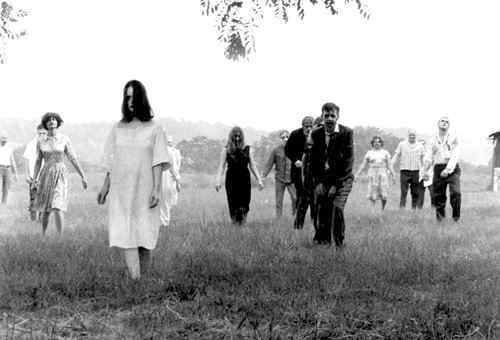
In the cult classic horror film, The Night of the Living Dead released in 1968, the dead return as flesh eating ghouls causing panic among the living. After analyzing this film through Stuart Hall’s essay “The Work of Representation,” constructed meanings rely on social and historical contexts, yet I find that these meanings are not so different now from its premiere almost 45 years ago. Critics claim the representation of homicidal ghouls symbolizes the cutthroat nature of capitalism, which still remains a heated debate among democrats and republicans in our present economy. Feminists argue that the lead female character, Barbra, portrays a weak heroine dependent upon men. However, in her defense as helpless, I understood her character as one in a state of shock that gave her humanistic qualities. In a way she became a zombie because of her depressed emotional state over the loss of her brother. This shows the connection of the living and the dead and their similar catatonic presence. She didn’t simply move on and leave him behind like he never existed as others might have, but she mourns him becoming a type of zombie herself. She also loses her life going to fight off the zombies to save another woman showing her bravery. The other female costar, Judy, leaves the safe house to accompany her boyfriend in the ghoul-infested yard in hopes to make an escape. In my opinion these women showed as much strength as the men at certain times, especially in comparison to the weak husband, Harry Cooper, who selfishly put his life as top priority leaving the others out to dry. Critics also praise the director George Romero for casting an African American man as the lead in a cast of white European-Americans, but black people still rarely lead a cast of predominantly white actors. I believe the dominant discourse is still very similar to that of 1968, and the very things viewers questioned then we still question now.

You fear what's in your own heart

Another intriguing element in the film is the role of the media. The first thing each person notices in the house is the radio and what the broadcasters are saying about the epidemic. The radio acts as a lifeline to the outside world relaying the message that there is still a sane humanity. From now back to the sixties media holds the power, as Hall writes, “that in certain historical moments, some people had more power to speak about some subjects than others” (42). Here we can see the everlasting powerful voice of the media. Even the concerned mother leaves her dying child’s side to watch the television broadcast of what’s going on in the world outside of the attacked house. Right after the broadcast is over they all agree to follow the journalists advice and leave their confine in search of the government safe houses. No questions asked their knowledge of what’s happening outside does not hold as much value as the national news, but in reality they know just as much as anybody out there. The lead hero, Ben, knows that the ghouls fear fire because of personal experience, not from information he received from the news. In this sense Ben should be seen as more powerful and knowledgeable, but the voice of the media reigns true. Here we see another one of Hall’s points: “knowledge linked to power, not only assumes the authority of ‘the truth’ but has the power to make itself true” (49). To this day media holds the image as a voice of truth, but clearly this position can be questioned considering everyone dies after following their advice. As viewers the truths we take from this film vary on personal experience, but we construct these truths through specific social and historical contexts, which haven’t changed too dramatically over the years. Romero presents timeless themes that shake viewers and question our sense of morality in times of mass hysteria.


Sunday, February 19, 2012

Room for one at the Bates Motel

“We all go a little mad sometimes. Haven’t you?” The famous words stuttered by Norman Bates in Alfred Hitchcock’s suspenseful masterpiece Psycho. The eerie motel keeper and faithful momma’s boy shakes viewer from the moment he opens his mouth. For those of you who haven’t seen this classic thriller (please do so asap) it opens up with a young woman Marian who goes on the run after stealing forty thousand dollars. She pulls over for the night at the Bates Motel run by Norman and his mother, but during her stay she gets brutally murdered. At first viewers believe its Norman’s mother slashing off characters until it is discovered that his mother has been dead for years. Norman actually has a split personality living as both his mother and himself, while his mother’s stuffed body remains sitting by the window in her rocking chair.


Norman’s creepy persona is clearly conveyed through his twitchy mannerisms and stutter. He instantly represents a sheltered fragile man with no social skills hidden away from society with no connection to reality. To me the scene that solidifies his madness is when him and Marian eat dinner in the parlor. He speaks about his taxidermy hobby, while Hitchcock brilliantly cuts to shots of his stuffed birds hanging along the wall. The stuffed birds represent puppet like passive figures watching his madness progress. Most Hitchcock films focus on voyeurism and the idea of being watched and Norman is Marian’s peeping tom. Hitchcock builds this myth with point of view shots between the stuffed birds and Norman and Marian nervously looking in her rear view mirror. Eyes are everywhere and no place is safe.


The view we are given of the house is always at an angle and shows its isolation from the rest of the world. The bizarre house gives off an essence that tells people to stay away from this strange place because it doesn’t conform to what’s considered normal, and Norman’s far. The visual images in this film channel more meaning than the words, which is a crucial aspect to horror films. Viewers know how to classify certain scenes even without volume. We know there is something suspicious about the house because we are only given one image of it from a distance. Our limited view breeds a sense of mystery because we fear what we do not know. In film the camera has the power over the viewer to create meaning and show the audience specific shots while leaving others out to build suspense. Hitchcock does a beautiful editing job to move the plot and at the end we are left with all the answers in Norman’s psychotic twisted grin. Norman embodies the myth of the outcast and the psychotic behavior that takes over hermits.


Sunday, February 12, 2012

Too scared to look away?

The local news runs a genius business: scare people so badly that they will be too afraid to leave their house, forcing them to watch television all day. Now I must admit I’m not really into watching the news, I’m more of an NPR junkie when it comes to getting information. Perhaps it’s the soothing monotone voice that NPR requires of their reporters that reels me in because after viewing so much news I felt overwhelmed. When I watched three news programs this week I felt bombarded with images and voices yelling at me to think a certain way or be afraid of something else. This weekend I checked out American’s News HQ (a branch from the Fox network), CNN Newsroom (owned by TBS), and 7 News at 6 (NBC local news). Now after watching 3 hours of the news I heard the same stories! From the GOP election, riots in Syria and Greece, illnesses, fires and to the top story of the hour… Whitney Houston’s death, it was all the same. Each program added some cutesy personal stories in between the tragedies trying to ease our sorrows before hearing about another death or violent protest.

Every program’s topics functioned around violence and death. The funniest thing I witnessed was before each commercial break the broadcaster would mention the lead they had gained on serial killer. They made this plug three different times before cutting to a commercial and they never even told the story! They would drop this line hoping for viewers to stay glued to the screen, and they probably did, but with no answers. The main difference between all of these programs isn’t about content, but the tone and direction each story takes. The startling images upset you and the broadcaster tells you why. Fox was conservative, CNN leaned liberal, and the 7 News might as well have been an infotainment show. Each person told me what to think while flashing a big grin. Watching Fox was brutal; I think a liberal watching a Fox news program feels similar to Superman touching kryptonite. You couldn’t even get a coherent story without the broadcasters battling and cutting each other off before they could get a word out. I felt embarrassed watching such awkwardness and lack of journalistic professionalism. But hey we can’t all be as smooth as Ron Burgundy and Veronica Corningstone…


End note: watch the news with a clean slate and construct the story outside of your own mind from all different perspectives. Don’t let the code of fear that broadcasters promote control your view of the world. At the end of the day it’s not how you view the world anyways, it’s how you live in it.


Sunday, February 5, 2012

Bowling for Columbine


In Michael Moore’s documentary Bowling for Columbine he addresses the United State’s gun policy and the repercussions of this legislation throughout the country’s history. Personally I’m not a huge fan of Moore, but his approach is to agitate viewers to drive his point. Viewers should not hesitate to see this film if they aren’t a Moore fan because this documentary focuses on uprooting common perception of crimes in the U.S. with real statistics. He offers a view outside of the mainstream media that disrupts American viewers’ perspective of gun violence.

In my opinion the most shocking fact that Moore presented were the amount of deaths in each country caused by guns. The U.S. had a whopping 11,127. And yeah I just said whopping because every other democratic nation had numbers in the hundreds. The difference is astronomical, and throughout the film Moore discovers why.


The main reason people owned a gun was for their own protection. A member of the Michigan Militia told Moore that it’s “American tradition to be armed,” and if you didn’t possess a gun then you’re an irresponsible citizen with no means of protection. People fear crime because of the constant stream of images they receive in the media, yet crime rates are going down. Moore calls out the media for hyping up stories about killer bees, Y2K, and poisoned Halloween candy, and he also pays a visit to the creator of the hit show Cops.


Moore confronts the creator about his popular recurring story line of showing black and Latino men being arrested more than any other race. The creator claimed that he didn’t know how to tell any other story. This is the story constantly being told to American viewers: crime is rampant and guns are the answer.


But how do viewers internalize this message? Power lies in the gun not the person. A young man Moore interviews says that he was placed at number 2 most likely to call a bomb threat, and he thought that at least he was number 2 at something in his town. Guns get attention and people listen to your gun if they ignore your voice. When Moore asked Marilyn Manson what he would say to the Columbine shooters, Manson said he wouldn’t tell them anything just listen because nobody else did. Moore does a great job at telling all sides of the story (clearly pushing his opinion), but with skilled montage editing techniques he paints a convincing picture of the United State’s disturbing gun policies compared to other nations. 

Sunday, January 29, 2012

Mean World Syndrome


Popular belief suggests that excessive exposure to mediated violence directly causes people to become more violent. In the film Mean World Syndrome based on George Gerbner’s research on cultivation theory in media, he explains that viewers do not become more violent, but they perceive the world as a violent place with increasing crime rates. In reality, statistics show that crime rates are dropping and lower than they have ever been. So why do Americans fear violence more than ever? According to Gerbner, television is the primary storyteller of our time, surpassing the family, religion, schools, and oral history. An interesting point he made about media content is the easily understood “violence plot” that focuses on action rather than dialogue, which conveniently translates internationally. Americans see violent images constantly from cartoons to the local news. The film shocked me when they mentioned that children see 8,000 murders by elementary school and 200,000 violent acts by 18 years old.

The funny thing is these violent images are given to us through only several media conglomerates. Viewers receive a steady stream of repetitive images, rather than diverse content. Certain groups are targeted to present viewers with a narrow minded image. Latinos, Arabs, African Americans, and immigrants are all given false representation on television, which gives people a false perception. The lack of diversity given to these cultures causes viewers to believe all Latinos are gangsters, all Arabs are terrorists, and all African Americans are thugs. Gerbner addresses the fact that the lack of contrasting images is inherently our fault because as viewers and consumers we give so much power to money hungry commercial business. I wished the film gave more attention to the media outlets and what drives them to show so much violence, but this film is based on viewers’ reaction to violent media.

Ultimately this film concludes that heavy users of television and other media live in a state of fear. Mediated images cloud their sense of the world and leave them with a distorted vision of reality. People become scared in a culture of meanness and turn toward security and lack of privacy to live in a sheltered fearful state of mind. Gerbner does not go much into the solution for this problem of living in a “mean world”, but as viewers we should look at the facts and make judgments based on our lived experiences and relationships rather than focus on mediated representations.