Sunday, May 6, 2012

Final Farewell to Fear

After an eye opening course on the culture of fear I feel as if I’ve finally been let behind the curtain to discover the Wizard of Oz... an old fragile man serving to trick us all. The Wizard’s powers turned out to be mere fantasies held in the imaginations of dreamers: the media, politicians, and unfortunately us. We have constructed this culture of fear and fed into the fabrications created by power hungry advocates who profit from our trepidation. Like a clever magician deceiving his audience we have been distracted by a masquerade in order to misguide us from the real problems in our society. Rather than worry about economic disparity, making healthcare affordable, or addressing the growing gun problem in America we occupy ourselves with sensational stories, which only keeps us from fixing the situation.

Subduing our appetite for hopes of change with fears of monster moms, terrorists, and killer kids keeps society at bay and politicians on top. Politicians divert our concerns, but more importantly our tax dollars. Billions of dollars go to faulty legislation, prison systems, and unnecessary safety precautions that inevitably go to waste. The solution then is simple: allocate our tax dollars to positive programs like education, rehabilitation, and social services. Unfortunately, the culture of fear is a business and destroying it would put certain people of power out of a job, so the cycle continues. Profit hungry fear mongers perpetuate lies and exaggerate statistics and we literally buy into it.
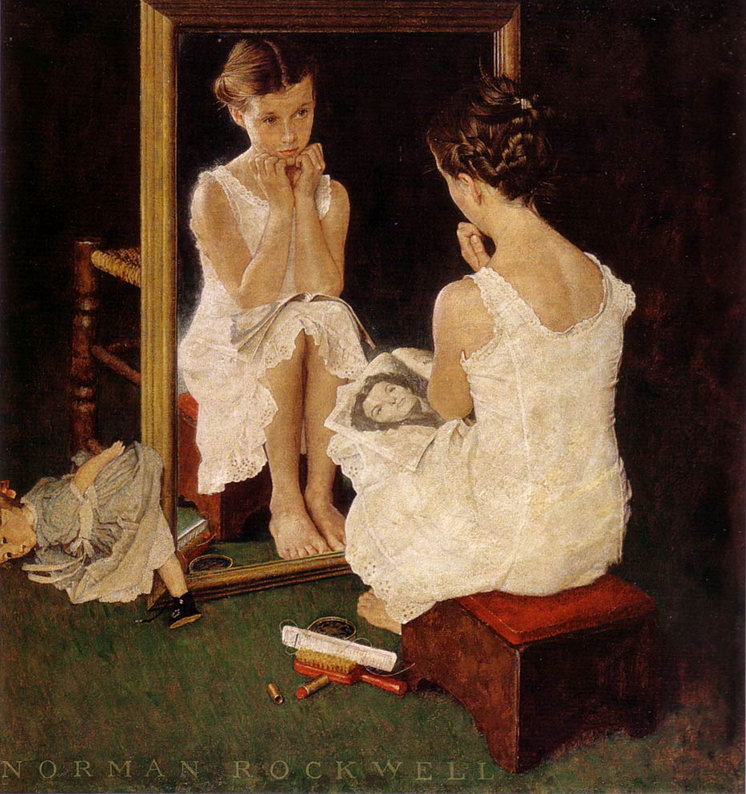
I think I’ve learnt more from Glassner’s novel Culture of Fear more than anything else I’ve read in my entire college career. I was shocked by the real statistics he gives, and how I was so easily fooled by the fake numbers from the media representations. Clearly, like mostly everyone else in America, I put too much faith in the media and elected politicians. Not that no one should be trusted because that would just add to the culture of fear in a whole other way, instead I urge people to look into the facts themselves. At the end of the day don’t believe everything you hear because taking everything at face value will leave you shortsighted. It’s time we go to the root of the problem and look in the mirror because even though we may not create fear, we keep it alive.

Monday, April 30, 2012

Can we wake up from the nightmare?


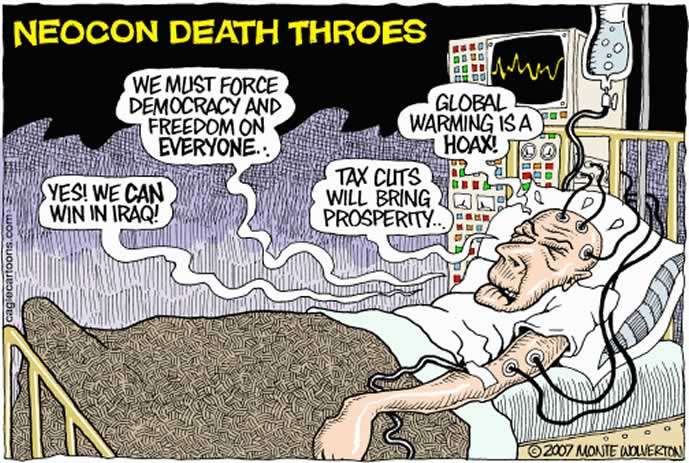
The final installment of The Power of Nightmares part 3, “The Shadows in the Cave,” tied up the complete story arc very nicely. Before watching this documentary I knew almost nothing about terrorists, Al Qaeda, the Neo-Conservatives, and sadly 9/11. I was only 11 at the time so I only saw things on the surface and usually from media pundits, which I now know cannot always be trusted. By the time I became more of an active citizen the culture of fear had already overtaken this nation leaving me to believe that terrorism and Al-Qaeda were strong forces to be reckoned with. Unfortunately, like many others I was fooled to see America as the knight in shining armor marching into Iraq and Afghanistan to save the world from evil.


The third part of this documentary opened my eyes to the fact that Al-Qaeda was an exaggerated terrorist network that was given power not from within, but from outside forces like the Neo-Conservatives, the media, and panicked citizens. I found it shocking that Bin Laden had no formal organization or name for it until the U.S. invented one for him in order to prosecute him as a leader of a terrorist organization. The lengths the U.S. government has gone to bend the truth really upset me, and more so because I was totally oblivious to all of it. The FBI manipulated evidence and witnesses to get the answers they wanted, rather than the right answers. As one scholar notes these investigative and intelligence agencies start with a conclusion built from assumptions and then fill in the blanks with junk evidence… stereotyping at its finest. As citizens we have given up so much in order to combat a phantom enemy.

Until 9/11 both the Neo-Conservatives and Al-Qaeda were down and out, but both organizations allowed one another to rise to the top again. They are almost a mutually dependent relationship, however they aren’t making any strides forward, instead they just run around in circles. 9/11 shook Americans to the core and the Neo-Conservatives took this violent imagery to show the world that they must conquer evil, placing them at the top of the totem pole of power. The documentary ends with a more promising note that citizens are becoming more skeptical of these fantasies, which I think is evident with the election of Obama and the push to get our troops out of Iraq. It should be noted that this film aired in 2004 so I think while there are some shortcomings it does thoroughly analyze the rise of these parties, and hopefully now we can see their demise in present day. I recommend this entire series and hope that while people watch they can question their own role in the construction of this nightmare.


Sunday, April 22, 2012

Phantom Enemy

In Part 2 of The Power of Nightmares the discussion continues around the battle between Neo-Conservatives and extreme Islamists. The documentary picks up around 1980 with Reagan in office and the Cold War still in full swing. What I found interesting was that during this time we were allies with Afghan freedom fighters and financially supported the Mujahideen. The CIA even trained them in assassination, guerilla attacks, and car bombs. Since the Soviets were their common enemy everything could be peaceful because each team had their bad guy and the bad guy was going down. The funny part was the United States and freedom fighters didn’t defeat the Soviets because the Soviets defeated themselves. One man interviewed said that the Soviet Union rotted away from within, yet Neo-Conservatives and extreme Islamists took this myth and thrived on it, which led them to much more radical endeavors. The myth that both groups were superior and undefeatable only left them with one more thing to do: find an enemy to make inferior, which happens to be one another.

Once these former financial allies turn on one another both groups begin to face internal destruction as well. Extreme Islamists are being heavily resisted because their willingness to kill innocents at no end and even turning on one another. Neo-Conservatives start to lose support and have to force preachers to advertise for them. These two groups definitely perpetuate our culture of fear and fuel the Mean World Syndrome, but I don’t think they are winning in the way they want to be. In my opinion some of these ultra conservatives just sound so overboard and not every Muslim is turning into a terrorist like ignorant people would like to believe. I hope this final part will answer for me who is winning for pushing these extreme sociopolitical agendas? It seems like the leaders and members of both these groups have fallen victim to their own game. In the interviews with the Neo-Conservative party members I honestly felt uncomfortable because they acted as superior as Bin Laden in their tone of voice and their deceptive rhetoric. They actually believe the very illusions they drew up; it almost felt like I was watching Inception. I’m hoping this last part doesn’t leave me on a cliffhanger like Leo did, but I’ll give my final recommendation after I complete the series.

The Ends Justify the Means

Part 1 of the BBC series Power of Nightmares explains the development and progression of our biggest nightmare: terrorism. While you can simply wake up from a nightmare it seems as if we can’t escape terrorist threats, yet this series proves that terrorism is as fantastical as the boogeyman, which relies on popular myth more than reality. The main people that carry out this fantastical story that we are constantly at threat from evil forces come from two opposing political groups, the United State’s Neo-Conservative party and the extreme Islamist Jihad.

This series traces back to the 1960’s when two scholars created ideologies that would take on a life of their own far beyond their years, Leo Strauss and Sayyid Qutb. While Strauss influenced the founding members of Neo-Conservative party Qutb began a lifestyle that inspired radical Islamist leaders. This film goes back and forth from one ideology to the other over the course of 20 years. This technique made following the plot a little difficult in term of location, yet it drew up a nice timeline approach. In the early 1960’s with liberalism on the rise Strauss believed that America was beginning to collapse from moral decay, similarly to Qutb’s opinion that Western capitalist infiltration to Egyptian culture resulted in the collapse of traditional Islamic values.


The film continuously pointed out that both groups and their leaders rose to power based on emphasizing fear. These leaders no longer spoke of promising dreams, but instead on protecting us from evil threats (ones which we cannot see). These threats are nothing more than complete fabrications used to scare us into our isolated worlds where we are sheltered from the truth, keeping us in place and them in power. Nevertheless, the harsh reality that we are left with is two radical political groups that have bought into their own garbage. This was the most interesting point they made in Part 1 was that after all this time these groups began to justify their own immoral behaviors, like killing and lying, in effort to continue their own sociopolitical agenda. These groups are truly convinced that they are right and every other way is wrong, and they will stop at nothing to become the dominant power. Feeding us lies and killing the innocent is good reason for them because the ends always justify the means.

Sunday, April 1, 2012

Edward Said on Orientalism

The documentary Edward Said on Orientalism discusses his research on the representations of people from the Orient in popular media and literature. The Orient refers to the east and encompasses multiple countries and cultures, yet we only receive one similar image based on abstractions rather than direct experience. Said is from Palestine and he began his research because he didn’t relate to the representations and discourse about the Orient.

Said claims that people understand the east through a lens he calls Orientalism. An interesting point he made was the difference between Americans’ perception of Orientalism compared to Britain and France. While Britain and France had a direct relationship with the Middle East during the years of imperialism and colonization the United States lacked authentic exposure. Thus, Americans’ impression of the Orient relies more on fabrications than actual facts. We are left with a picture of the Orient painted by commercial media industries looking to profit first and foremost. For some reason the discourse of the Orient never develops, creating an eternal timeless quality that doesn’t grow, but stays stagnant. So we get a repetitive (and monotonous) story that continues to circulate through our society. Commercial media follows the code that all Arabs and Muslims are dangerous extreme terrorists and villains. This is a powerful discourse that persists throughout our culture and is easily tolerated. In the film Sut Jhally notes that racial slurs about Arabs and Muslims are widely accepted and rarely given a second notice.

The most notable part of the film was Said’s concluding statements that referenced the work of Antonio Gramsci. “History has left us in an infinity of traces,” and it is up to us to compile a collective history. We must look at each discourse from multiple points of view if we want to gain a true knowledge. Trading places with someone sheds a new light on the situation that allows a person to sympathize with the Other, that the media seldom portrays. Coexistence can be accomplished when each person makes it a mission to include the Other without suppressing differences, and instead embracing them.

Thursday, March 15, 2012

Fear the Right Things

So far this has been one of the most intriguing classes I’ve taken in the two years I’ve been at UMass. From the local news, television shows, to films we can see how our media perpetuates the culture of fear in our society. I’ve always been rather skeptical about certain representations in the media, but as a white, middle class female certain things were just invisible to me. I think the readings and films we have viewed this year definitely have opened my eyes to the facts rather than the mask that politicians and media outlets parade in front of me. Overall the biggest lesson I’ve learned is that money sticks with money, and the rest can just eat cake.

One of the most interesting articles to me this year was Sharrett’s analysis of film in our neoconservative culture. No doubt it was definitely one of the most difficult reads, however it revealed so much about our culture’s economic system and the media representations used to keep it in place. One of my favorite points he made was how liberal rhetoric gets used to make people believe that are system accommodates to disparate groups in society, yet as he says the ‘neos’ just make our corrupt system follow a lawful course.

This has been one of the most challenging courses, but I feel I’ve learnt so much from the material and also my peers. I think the discussion helps a lot in expanding my thoughts because to really understand our culture is to garner multiple perspectives from diverse backgrounds. Some people mention things in class and I just think, wow I never would have seen it that way, but it makes so much sense. The culture of fear can be seen everywhere, and personally for me I see it in my parents the most. Perhaps when you have kids you begin to fear the world they will grow up in more than your own. I hope this class will ease my own exaggerated fears, as it has thus far, and allow me to concentrate on more important things like global warming and economic disparity.

Sunday, March 11, 2012

Welcome to the Emerald City


After watching the pilot episode of Oz and several clips from other seasons I feel truly terrified of the prison system through this lens. This hostile barbaric environment is filled with murderers, even though statistically most prisoners are incarcerated for drug charges. To see the real Wizard behind the curtain of the prison system watch the documentary, The War on Drugs: The Prison Industrial Complex.  This film enlightens viewers on the reality of the penal system and the police force that drives this “war,” as one scholar describes it as “the war on poor people.” The American penal system is now driven by profit rather than rehabilitation, which becomes detrimental to our society, specifically poor urban societies. Our neoliberal capitalist society perpetuates a cycle of oppression and inequality towards poor people of color and our corrupt legislation and media representation mask this reality. People feed into this system because they believe crime is rampant (yet Glassner tells us crime rates are decreasing) which leads to stricter and longer sentences paid by American tax dollars. The incarceration rate has grown exponentially and Americans understand this shielded environment through media images of prisons and criminals.

The hit HBO series Oz premiered in 1997 and ran until 2003. Ironically the demographics of an HBO audience are mainly white and wealthy, so basically opposite of prison demographics. Check this site out for the numbers on HBO audiences: http://www.quantcast.com/hbo.com.  As Yousman mentions in his study of the show, Inside Oz, that the viewers who receive this representation of prison have no real life experience with either going to prison or knowing someone who has gone. This becomes extremely dangerous because their reality won’t be blurred by this image if they have no reality to distort. People take this show as the truth and praise it for its authenticity, but who are they to know what’s authentic about prison life? They believe since HBO doesn’t need to censor their material that the writers aren’t holding back the truth. This continues the discourse that men of color are violent criminals that need to be locked up, and it’s all driven by one thing: money.

Media outlets and politicians use rhetoric to scare us into thinking that our biggest problem in this country is drug use, as Ronald Reagan put it “America’s crusade” against drugs. I’m not condoning drug use but people are made to think poor urban youth slip through the cracks of society because of drugs and spend all our money to rehabilitate them in prison. From what I’ve seen in the Emerald City’s prison is crime increases on the inside, so I guess rehabs out of the question. We should be taking this money to rehabilitate positive social organizations not the police. The police profit from drug charges and more arrests which equals more money for them and less for the rest. They target poor communities, put these images in front of a white audience and preserve our culture of fear. All that’s left is to make a twisted hyperviolent prison show ironically headed by a black man to show us that black men can succeed because it’s not our system’s fault if you fail, it’s only the individual to blame.